February 14, 2026
Seedance 2.0 Review: The AI Video Revolution That's Changing Film Production Forever
An detailed review of Seedance 2.0, ByteDance's revolutionary multimodal AI video generator. We explore its director-level automation, consistency, and how it compares to Sora 2 and Runway Gen-4.

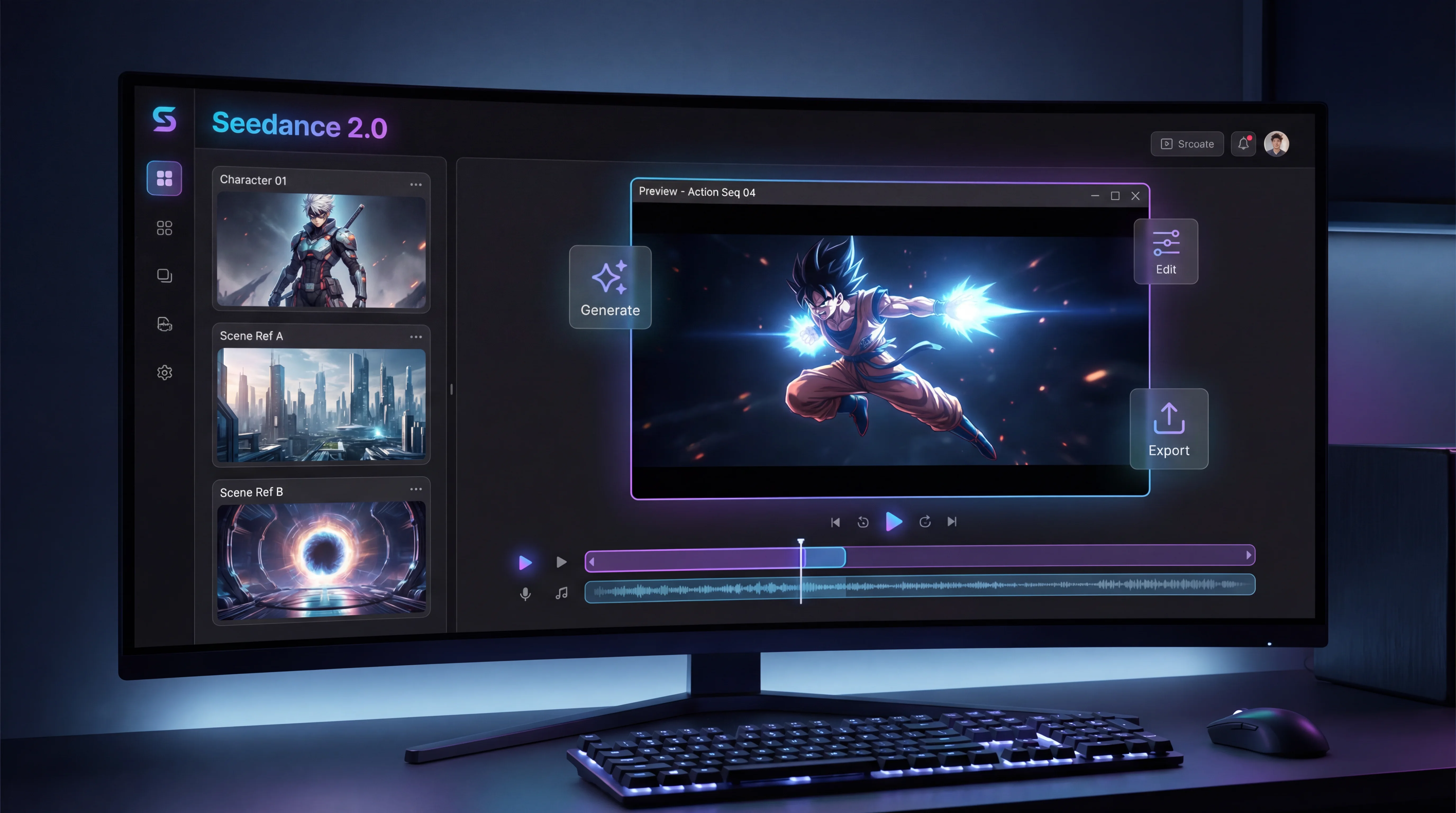
When ByteDance quietly released Seedance 2.0 over a weekend in early February 2026, the global creative community experienced what many are calling the "ChatGPT moment" for video generation. Within 48 hours, the model's internal documentation had been viewed by hundreds of users simultaneously, and prominent filmmakers like Tim from Yingshi Hurricane publicly admitted feeling genuine fear about AI for the first time in their careers.
After conducting extensive hands-on testing with Seedance 2.0 over the past week, I can confirm the hype is justified. This isn't just another incremental update—it represents a fundamental shift in how AI video generation works, moving from "impressive demos" to genuinely production-ready tools. In this comprehensive review, I'll break down exactly what makes Seedance 2.0 different, share real-world test results, and help you understand whether this technology is ready for your workflow.
What Makes Seedance 2.0 Different?
The Multimodal Revolution
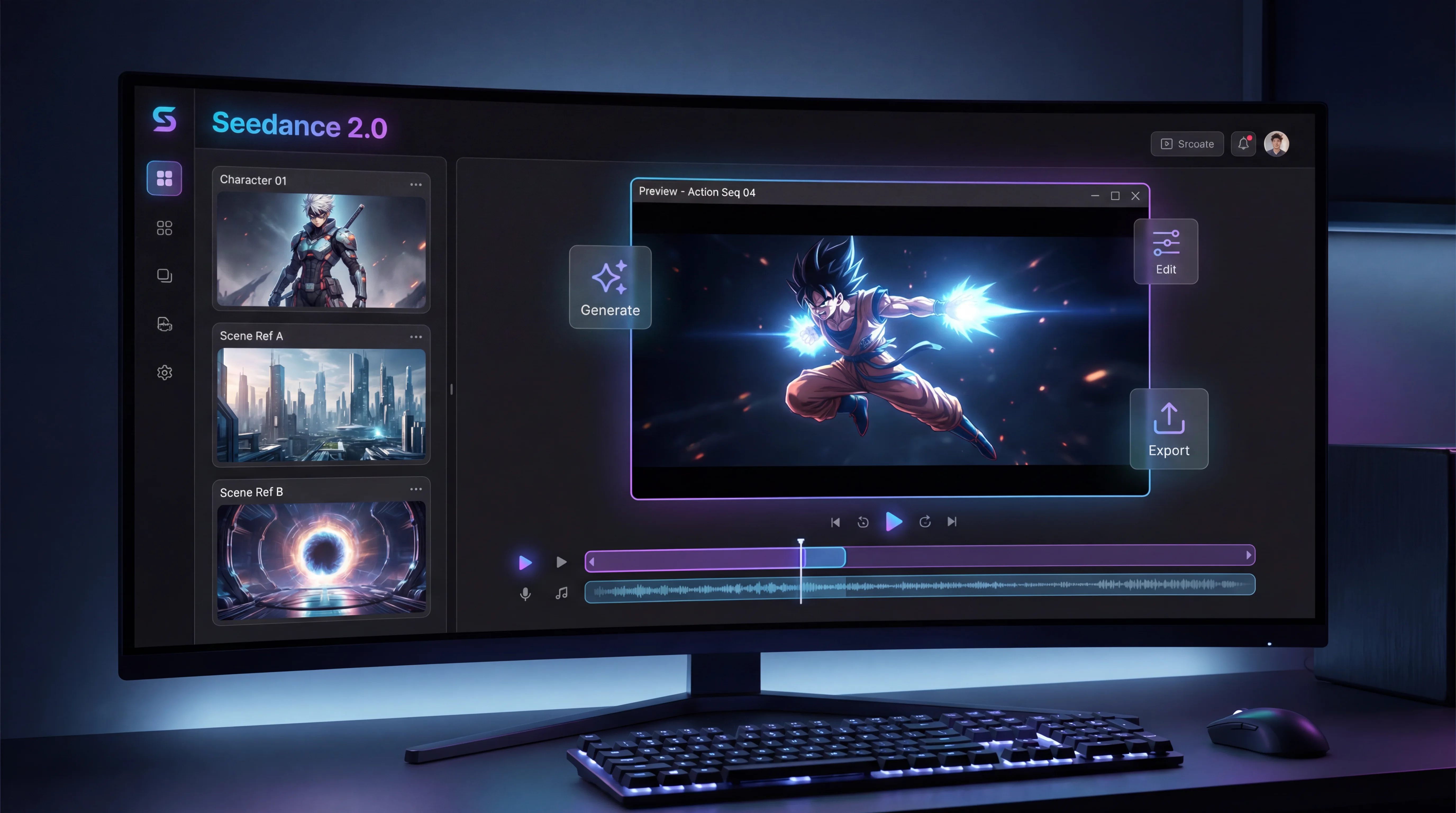
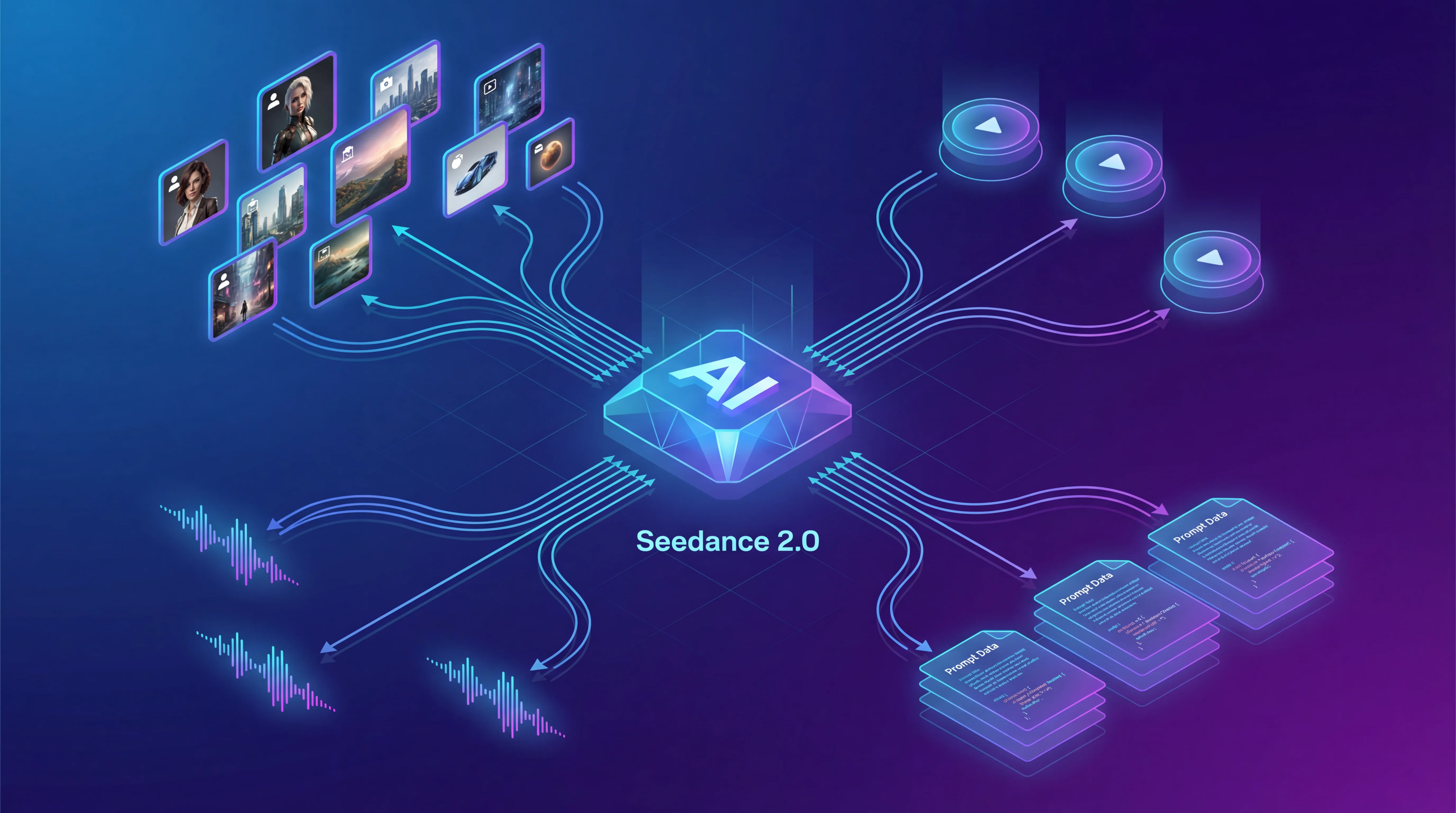
The defining feature of Seedance 2.0 is its unified multimodal architecture. Unlike previous AI video generators that primarily relied on text prompts, Seedance 2.0 accepts up to 12 simultaneous reference inputs:
-
Up to 9 images for character design, scene composition, and visual style
-
Up to 3 videos (max 15 seconds total) for motion reference, camera work, and special effects
-
Up to 3 audio files for rhythm, pacing, and synchronized sound
-
Text prompts for detailed instructions and creative direction
This isn't just about having more input options—it fundamentally changes the creative workflow from "describe and hope" to "show and specify." According to independent testing, this reference-based approach delivers significantly more consistent results than pure text-to-video generation.
Director-Level Automation
Perhaps the most shocking capability is Seedance 2.0's automatic shot composition and camera work. The model demonstrates what developers are calling "director-level thinking"—it doesn't just animate scenes, it makes intelligent decisions about:
-
When to use wide shots to establish spatial relationships
-
How to transition between camera angles for narrative flow
-
Where to place close-ups for emotional impact
-
How to pace action sequences with appropriate rhythm
In practical testing, users report that Seedance 2.0 can generate coherent multi-shot sequences from a single prompt, complete with professional camera movements like push-ins, pull-outs, pans, and tilts—all without explicit instruction. Industry analysis confirms this represents a threshold crossing from "impressive demo to genuinely useful tool."
The 90% Success Rate
One of the most significant improvements is consistency. Traditional AI video tools suffered from what the industry calls "gacha-style workflow"—you'd generate 20 versions hoping one would be usable. Early production testing reports Seedance 2.0 achieves a 90%+ usable output rate on first generation, compared to roughly 20% for previous-generation tools.
This dramatic improvement stems from three core technical advances:
-
Character consistency: Faces, clothing, and body proportions remain stable across camera movements and shot changes
-
Physics simulation: Objects behave realistically with proper weight, momentum, and collision
-
Temporal coherence: Motion flows naturally without the jarring artifacts that plagued earlier models
Real-World Testing: What Actually Works
Test 1: Cinematic Narrative Sequences
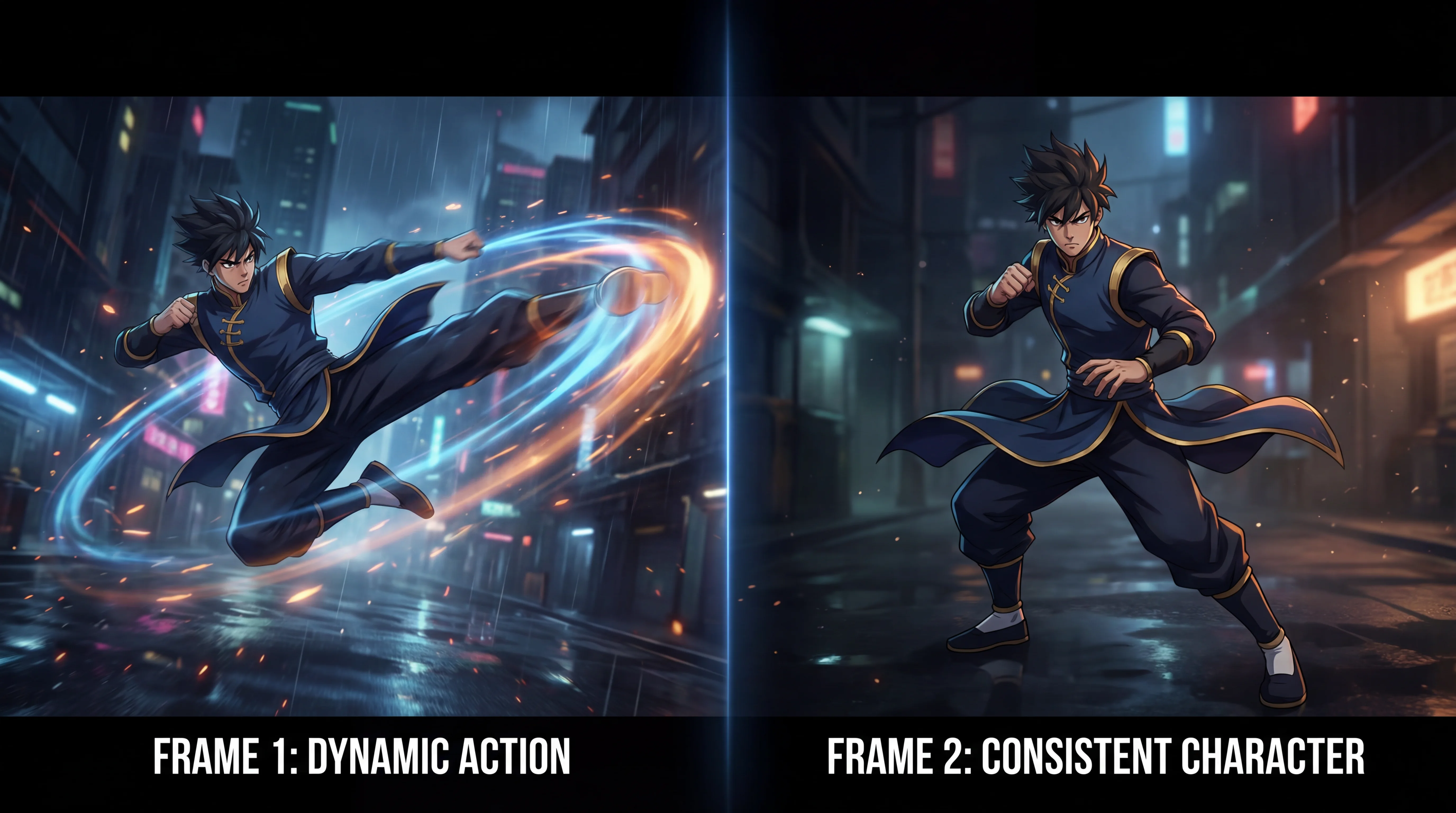
For my first serious test, I attempted to create a 60-second anime short drama—something that would have been nearly impossible with previous AI video tools. The workflow was surprisingly straightforward:
-
Generated character reference images using AI image generation
-
Created four 15-second segments with detailed prompts
-
Assembled the clips in a standard video editor
The key insight: By using consistent character reference images across all four generations, Seedance 2.0 maintained visual continuity throughout. The protagonist's appearance, clothing, and even subtle facial features remained stable across different camera angles and lighting conditions.
Results: The entire process took approximately 15 minutes, with zero regenerations needed. Each segment worked on the first attempt, which would have been unthinkable with earlier AI video models.
Test 2: Multi-Character Action Scenes
Complex scenes with multiple moving subjects have historically been where AI video generation falls apart. To stress-test this capability, I created a battle sequence inspired by Jujutsu Kaisen, featuring four characters simultaneously engaged in combat with distinct fighting styles.
The prompt structure:
0-2 seconds | Wide shot: Night cityscape ruins, barrier deployed.
Yuji and Megumi charge in from opposite sides, debris kicked up by airflow.

2-4 seconds | Medium shot rapid cuts: Nobara leaps from above,
cursed tools landing, three form encirclement.

4-6 seconds | Cursed spirit emerges from ruins, body twisting and expanding.
Camera pulls back showing scale difference.

6-8 seconds | Coordinated attack: Megumi summons shikigami for flanking,
Yuji frontal assault, Nobara ranged cursed tool projection.

8-10 seconds | Close-up sequence: Punch impact, cursed energy burst,
shikigami bite. Multiple motion trails and shockwaves.

10-12 seconds | Wide shot: Gojo teleports into barrier from above,
presence suppresses entire field. Cursed spirit movement halts.Results: Generated on the first attempt with impressive coherence. The model correctly interpreted the multi-character choreography, maintained individual character designs throughout, and even added appropriate special effects (cursed energy visualization, impact effects) without explicit instruction.
Test 3: Reference Video Replication
One of Seedance 2.0's most powerful features is its ability to learn from reference videos. I tested this by attempting to replicate complex dance choreography:
-
Uploaded a reference dance video (TikTok-style performance)
-
Provided a single character reference image (AI-generated model)
-
Simple prompt: "Character from @image1 performs the dance from @video1, maintaining rhythm and movement precision"
Results: The output achieved near 1:1 motion replication. The AI character matched the reference dancer's movements, timing, and even subtle body language. This has massive implications for digital human content creation and motion capture workflows.
Test 4: Audio-Synchronized Generation
To test the native audio-video synchronization, I created a fashion model transformation video synced to music beats:
-
Input: Model reference image + outfit images + beat-heavy music track
-
Prompt: "Model changes outfits on each music beat, smooth transitions"
Results: The model correctly identified beat markers in the audio and timed visual transitions accordingly. This beat-sync capability works without manual timing specification, suggesting sophisticated audio analysis under the hood.
Technical Specifications and Capabilities
Generation Parameters
| Parameter | Specification | Notes |
|---|---|---|
| Duration | 4-15 seconds per generation | Recommended max 10s; use extension for longer |
| Resolution | 1080p default | Multiple aspect ratios supported |
| Generation Time | 3-5 minutes per 15s clip | Varies with input complexity |
| Input Limits | 9 images + 3 videos + 3 audio | Total 12 reference files |
| Video Extension | Seamless continuation | Maintains narrative and visual continuity |
Native Audio Capabilities
Seedance 2.0 generates synchronized audio alongside video, including:
-
Sound effects: Footsteps, impacts, environmental ambience
-
Background music: Contextually appropriate scoring
-
Dialogue: Phoneme-level lip-sync in 8+ languages
-
Language support: English, Mandarin, Japanese, Korean, Spanish, French, German, Portuguese, plus regional dialects (Cantonese, Sichuan dialect)
Developer comparisons note that while Sora 2 and Kling 2.6 also offer audio generation, Seedance 2.0's lip-sync accuracy and multi-language support are particularly strong.
The @ Reference System
Seedance 2.0 uses an intuitive mention-based syntax for controlling how reference materials influence generation:
@image1 as the main character, performing actions from @video1,
with special effects style matching @video2, synchronized to
the rhythm of @audio1
This explicit referencing system gives creators unprecedented control over which aspects of each reference material should influence the final output.
Comparison: Seedance 2.0 vs. The Competition
Seedance 2.0 vs. Sora 2
Detailed comparisons reveal distinct positioning:
Seedance 2.0 Advantages:
-
Multimodal reference control (images + videos + audio simultaneously)
-
Automatic multi-shot generation with coherent scene transitions
-
Production-focused workflow optimized for fast iteration
-
90%+ first-generation success rate
-
Native beat-sync capabilities
Sora 2 Advantages:
-
Superior physics simulation for complex real-world scenarios
-
Better lighting quality and photorealistic rendering
-
Longer maximum duration (extended world modeling)
-
Stronger performance on pure text-to-video without references
Verdict: Industry analysis positions Seedance 2.0 as the production-focused tool for "fast-turnaround narrative video production, advertising, and social media content pipelines," while Sora 2 excels at long-form world simulation and photorealistic rendering.
Seedance 2.0 vs. Runway Gen-4
Seedance 2.0 Advantages:
-
Faster generation times with more predictable latency
-
Unified multimodal input (Runway separates text/image/video modes)
-
Better character consistency across shots
-
More affordable for high-volume production
Runway Gen-4 Advantages:
-
Integrated editing pipeline within the platform
-
More mature API with extensive documentation
-
Better video-to-video transformation tools
-
Established track record for production reliability
Verdict: Developer testing shows Seedance 2.0 delivers "the best shot at acceptable wait times" for near-real-time applications, while Runway offers superior post-generation editing capabilities.
Seedance 2.0 vs. Pika and Kling
Seedance 2.0 Advantages:
-
Dramatically longer maximum duration (15s vs. 3-5s for Pika)
-
Multi-shot narrative capability (Pika limited to single shots)
-
Superior character consistency (major weakness for Kling in complex scenes)
-
Professional-grade output suitable for commercial use
Pika/Kling Advantages:
-
Lower cost for simple, short-form content
-
Faster generation for basic clips
-
Simpler interface for beginners
Verdict: Seedance 2.0 operates in a different category—it's designed for professional content creation rather than social media experimentation.
Practical Applications and Use Cases
1. Short Drama and Web Series Production
The combination of character consistency, multi-shot generation, and 90%+ success rates makes Seedance 2.0 particularly compelling for short-form narrative content. Production workflow analysis suggests the model enables "coherent narrative expression" that was previously impossible with AI-generated video.
Cost implications: Traditional short drama production might cost $5,000-$50,000 per episode for location, actors, crew, and post-production. Seedance 2.0 can generate comparable footage for under $100 in compute costs, representing a potential 10,000x cost reduction for certain production types.
2. Advertising and Marketing Content
The reference video replication capability enables rapid A/B testing of creative concepts:
-
Generate multiple variations of the same ad with different visual styles
-
Test different pacing and editing rhythms without reshooting
-
Create localized versions with different talent without additional production
Real-world example: A fashion brand could generate 20 variations of a product video—different models, different environments, different camera work—in the time it would take to set up a single traditional shoot.
3. Animation and VFX Pre-visualization
Professional animation studios are using Seedance 2.0 for rapid storyboard animation and effects pre-visualization. The automatic camera work and physics simulation provide directors with moving storyboards that communicate creative intent far more effectively than static boards.
4. Digital Human and Virtual Influencer Content
The motion replication and lip-sync capabilities make Seedance 2.0 particularly powerful for digital human applications. Upload a reference performance, apply it to your virtual character, and generate content at scale with consistent character appearance.
5. Educational and Training Content
The ability to generate complex scenarios on demand—medical procedures, safety demonstrations, historical recreations—opens new possibilities for educational content that would be prohibitively expensive to film traditionally.
Limitations and Challenges
Despite its impressive capabilities, Seedance 2.0 has notable limitations:
1. Text Rendering Issues
Chinese and English text within generated videos often appears as garbled characters. This is a known issue that limits use cases requiring on-screen text (subtitles, signage, product labels). However, given ByteDance's success with text rendering in their Seedream image model, this limitation is likely temporary.
2. Generation Speed
At 3-5 minutes per 15-second clip, generation isn't instantaneous. For projects requiring dozens of clips, this adds up to significant waiting time. This is slower than some competitors but faster than others—latency benchmarks show Seedance "consistently the fastest of the three for equivalent quality settings" when compared to Sora 2 and Runway Gen-4.
3. Content Moderation Challenges
The platform implements aggressive content filtering that can be frustratingly opaque. Prompts are rejected without clear explanation of which terms triggered the filter. Celebrity faces and public figures are generally blocked, likely due to copyright and deepfake concerns. This "black box" moderation creates trial-and-error frustration when you don't know which words to avoid.
4. Limited Availability
As of February 2026, Seedance 2.0 is only available through ByteDance's Jimeng platform with a paid subscription (minimum 69 RMB/$10 USD). API access is expected to launch February 24, 2026, but is not yet publicly available. This limited access creates a barrier for developers wanting to integrate the technology into their own applications.
5. Cost at Scale
While individual generations are reasonably priced (approximately 60 credits/$6 for a 10-second clip without video references), costs escalate quickly when using video references (adding 70 credits per reference video). For high-volume production, these costs add up—though they remain far below traditional production costs.
Pricing and Accessibility
Current Pricing Structure
Based on community reports and testing:
-
Basic text/image-to-video: ~60 credits (≈$6 USD) for 10 seconds
-
With video reference: +70 credits per reference video
-
Subscription: Starting at 69 RMB (≈$10 USD) for basic access
-
Annual membership: ~1,500 credits included
Cost Comparison Context
While $15-20 for a 12-second video with multiple references might seem expensive compared to other AI tools, context matters:
-
Traditional video production: $500-$5,000+ for equivalent footage
-
Professional motion capture: $1,000+ per session
-
VFX and animation: $100-$500 per second for high-quality work
The 90%+ success rate dramatically improves the value proposition—you're not burning credits on failed generations.
Accessing Seedance 2.0
Currently, the easiest way to access Seedance 2.0 is through platforms that integrate cutting-edge AI video models. ImagenX AI provides convenient access to Seedance 2.0 alongside other leading video and image generation models, offering a unified interface for multi-model workflows without managing multiple subscriptions.
The Bigger Picture: What This Means for Content Creation
The Democratization Argument
Seedance 2.0 represents genuine democratization of video production capabilities. A solo creator with a laptop can now generate content that would have required a production team, expensive equipment, and specialized skills just months ago. This isn't hyperbole—the test results demonstrate production-quality output from simple prompts.
The Disruption Reality
Industry analysis suggests significant displacement of "mid-tier commodity VFX work" including background fills, crowd generation, and standard effects. However, premium Hollywood-level VFX requiring artistic nuance likely survives, with value shifting from technical execution to creative vision.
For content creators, the message is clear: those who master AI direction and aesthetic judgment will thrive, while those competing purely on technical execution face increasing pressure.
The Quality Threshold
What makes Seedance 2.0 significant isn't just that it's better than previous AI video tools—it's that it crosses the threshold into "actually usable for professional work." When prominent filmmakers like Tim from Yingshi Hurricane express genuine concern about AI capabilities, it signals that the technology has moved from "interesting experiment" to "legitimate competitive threat."
Practical Recommendations
Who Should Use Seedance 2.0 Now?
Ideal users:
-
Content creators producing short-form narrative content (web series, short dramas)
-
Marketing teams needing rapid creative iteration and A/B testing
-
Animation studios doing pre-visualization and storyboard animation
-
Digital human/virtual influencer operations
-
Educational content producers needing scenario visualization
Not yet ideal for:
-
Feature film production (duration limitations, text rendering issues)
-
Projects requiring extensive on-screen text
-
Users needing frame-perfect control (better to use traditional tools)
-
Budget-conscious hobbyists (pricing may be prohibitive for casual use)
Workflow Integration Tips
Based on extensive testing, here are practical recommendations:
-
Start with strong reference materials: The quality of your inputs directly determines output quality. Invest time in finding or creating good reference images and videos.
-
Write explicit shot descriptions: While Seedance 2.0 can infer a lot, being explicit about camera angles, shot types, and timing improves consistency.
-
Use the extension feature strategically: Rather than generating long clips in one shot, generate 10-second segments and extend them. This provides more control points.
-
Maintain a reference library: Build a collection of character designs, effect styles, and motion references you can reuse across projects.
-
Plan for iteration: While the 90% success rate is impressive, budget time for occasional regenerations and refinements.
The Verdict: Is Seedance 2.0 Ready for Production?
After extensive hands-on testing, the answer is a qualified yes—with important caveats.
Seedance 2.0 excels at:
-
Short-form narrative content (under 60 seconds)
-
Character-driven scenes with consistent protagonists
-
Action sequences and dynamic camera work
-
Content requiring synchronized audio
-
Rapid creative iteration and A/B testing
It's not yet ready for:
-
Long-form content requiring extended narrative coherence
-
Projects with extensive on-screen text requirements
-
Scenarios requiring frame-perfect control
-
Workflows where generation time is critical (real-time applications)
The technology represents a genuine inflection point. For the first time, AI video generation has crossed from "impressive demos" to "production-ready tool" for specific use cases. The 90% success rate, character consistency, and director-level automation combine to create something qualitatively different from previous-generation tools.
Looking Forward: What's Next?
The rapid evolution of AI video generation shows no signs of slowing. Expected developments include:
-
Extended duration: 60-180 second continuous scenes with maintained consistency
-
Real-time generation: Sub-minute generation times for interactive applications
-
Advanced editing: Direct manipulation of generated videos (style transfer, object replacement)
-
Text rendering fixes: Reliable on-screen text generation
-
API ecosystem: Third-party integrations and workflow automation
The question isn't whether AI video generation will transform content creation—Seedance 2.0 proves it already has. The question is how quickly creators will adapt their workflows to leverage these capabilities.
Final Thoughts
Seedance 2.0 isn't perfect, but it's the first AI video generation tool that feels genuinely production-ready for specific use cases. The combination of multimodal control, character consistency, and automatic cinematography creates a workflow that's closer to "directing" than "prompting."
For creators willing to learn its capabilities and work within its limitations, Seedance 2.0 offers unprecedented creative leverage. The technology won't replace human creativity and judgment—but it dramatically amplifies what a small team or solo creator can accomplish.
The AI video revolution isn't coming—it's here. The only question is whether you're ready to use it.
Ready to experience Seedance 2.0 yourself? Access Seedance 2.0 and other cutting-edge AI video models through Seedance 2.0, offering a unified platform for multi-model video and image generation workflows.
This review is based on extensive hands-on testing conducted in February 2026. Capabilities and pricing may change as the platform evolves.